


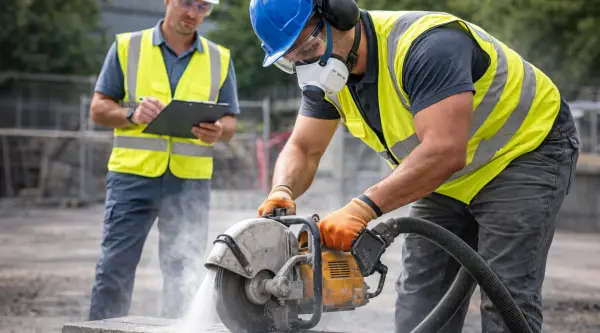
Silica dust in construction is a serious health risk linked to silicosis, lung cancer, COPD and asthma. This guide explains respirable crystalline silica (RCS), where it appears on site, how to control exposure with water suppression, dust extraction, RPE and health surveillance, and why proper construction health and safety training matters.
Construction workers deal with hazards every day, but some of the most serious risks are the ones people cannot easily see. Silica dust is one of them. It is created during many everyday tasks involving concrete, mortar, brick, stone, tiles and similar materials, and the finest dust can travel deep into the lungs. The Health and Safety Executive says regular exposure can lead to life-changing illnesses including silicosis, lung cancer, COPD and asthma. HSE and CITB guidance also notes that more than 500 construction workers are believed to die each year from exposure to silica dust.
What is silica dust and why is it so dangerous?
Silica is a natural substance found in most rocks, sand and clay, and it is present in many common construction materials including bricks, tiles, concrete and mortar. The biggest concern is respirable crystalline silica, often shortened to RCS. These particles are so fine that workers may not notice them in the air, yet they can be breathed deep into the lungs where they can cause permanent damage over time.
Why this matters on site:
- You cannot rely on visible dust alone to judge the risk.
- Short, repeated tasks can still create harmful exposure.
- Health effects often develop slowly, so workers may feel fine while damage is building.
- Once serious lung disease develops, the harm can be irreversible.
A real-life site example
A worker spends part of each day dry-cutting paving slabs with a saw. The task only takes 20 minutes at a time, so it does not seem significant. But repeated exposure across weeks and months, without extraction, water suppression or suitable respiratory protection, can add up to a major long-term health risk. That is exactly why silica control needs to be built into routine site planning rather than treated as an afterthought. This is an inference based on HSE’s explanation that common construction tasks can generate harmful dust levels and that the amounts needed to cause damage are not large.
Where silica dust is most commonly found on site
Many construction teams associate dust risks with demolition, but silica exposure can arise in a far wider range of activities. According to HSE guidance, risk can be created when materials are cut, chased, drilled, ground, polished or sanded.
Common high-risk tasks include:
- cutting concrete blocks, kerbs and paving
- chasing walls for cables and pipework
- drilling into masonry or concrete
- grinding mortar during repairs or repointing
- breaking out floors, walls or slabs
- sweeping up fine dust after dusty tasks
- working with sandstone, engineered stone, tiles or brick products
This is one reason supervisors and managers need a strong grasp of task-specific controls. Goldcross’s CITB accredited SSSTS course is designed to help supervisors understand practical site safety responsibilities, communication and control measures in day-to-day construction settings.
How to control silica dust on site
The HSE’s core message is simple: do not just hand out masks and hope for the best. Control starts with planning the work properly and using a combination of measures that reduce dust at source. HSE COSHH Essentials for construction silica specifically points employers towards controls such as dust extraction, water suppression and suitable RPE, used together where needed.
1. Eliminate or reduce dust at source
Start by asking whether the job can be done in a lower-dust way.
Examples:
- order materials cut to size where practical
- choose lower-dust methods and equipment
- avoid dry cutting where a controlled method is available
- plan work areas to keep other trades away from dusty tasks
These are sensible control principles drawn from HSE and CITB guidance on managing construction dust and silica.
2. Use water suppression
Adding water can stop dust becoming airborne during cutting or similar operations.
Good practice includes:
- checking water feeds are working before the task starts
- making sure workers actually use the system, not bypass it
- maintaining tools so the suppression remains effective
3. Use on-tool extraction
For many tools, local dust extraction is a key control.
This means:
- using the right shrouds, guards and extraction units
- emptying and maintaining systems safely
- checking filters and airflow performance regularly
4. Provide suitable RPE
Respiratory protective equipment can be essential, but it is not a substitute for source control. HSE says RPE should be selected and used correctly, and face-fit testing is important where tight-fitting masks are required.
A practical checklist for RPE:
- choose the correct protection level for the task
- ensure face-fit testing is completed where required
- train workers how to wear, check and store it
- replace damaged or worn equipment promptly
- remember that stubble or poor fit can reduce protection
5. Clean up safely
One commonly overlooked risk is housekeeping. Dry sweeping can throw settled fine dust back into the air.
Safer options include:
- using class-appropriate vacuum systems where suitable
- damping down dust before cleanup if appropriate
- disposing of dust carefully to avoid re-exposure
6. Review exposure and supervision
Controls only work when they are monitored.
Supervisors should check:
- whether the planned control method is actually being used
- whether workers understand why the controls matter
- whether conditions on site have changed
- whether other nearby workers are being exposed
Health surveillance is part of the picture too
For workers regularly exposed to RCS where there is a reasonable likelihood that silicosis may develop, HSE says health surveillance must be provided. HSE also states that surveillance should be considered in high-risk occupations, including construction.
That matters because:
- disease can develop before workers recognise symptoms
- surveillance can help identify early warning signs
- it shows the employer is taking health risks seriously
- it supports a more structured occupational health approach
Health surveillance does not replace dust control, but it does form part of a responsible and legally aware system for managing health risk.
Why training makes the difference
Silica dust control is not just about equipment. It depends on people knowing what they are looking at, why it matters and what good practice actually looks like in the real world.
Training helps teams:
- recognise hidden health hazards, not just immediate safety hazards
- carry out better risk assessments and method statements
- choose the right controls for each task
- supervise site work more effectively
- build a stronger safety culture across the whole project
For those new to the industry or working towards site access requirements, Goldcross offers Level 1 Health and Safety in a Construction Environment. For managers with wider responsibility for systems, legal duties and site standards, the CITB SMSTS and NEBOSH Health and Safety Management for Construction (UK) courses are both highly relevant.
What employers and supervisors should do next
If silica dust is generated on your projects, now is a good time to review whether your controls are genuinely effective or simply familiar.
A sensible next-step checklist:
- identify tasks that create silica dust
- check whether dust is being controlled at source
- review extraction, water suppression and RPE arrangements
- confirm workers have been trained and instructed properly
- consider whether health surveillance is needed
- monitor site practice rather than relying on paperwork alone
The strongest construction businesses do not wait for a problem, complaint or enforcement action. They build health protection into everyday site management.
Final thought
Silica dust is one of the most serious long-term health risks in construction because it is common, easy to underestimate and capable of causing permanent harm. The good news is that the risk can be reduced significantly with the right planning, controls, supervision and training. HSE and CITB guidance is clear: better habits on site can make a real difference.
If your team needs to strengthen its approach to construction health and safety, speak to Goldcross Training about the right course for your workforce. Whether you need awareness training for new entrants, supervisor development, or a higher-level construction safety qualification, the right training will help your people work safer and your business stay compliant.